Ray Kurzweil on the future of digital books | Technology | Los Angeles Times

Big fan of Kurzweil.

May he live to see the singularity.

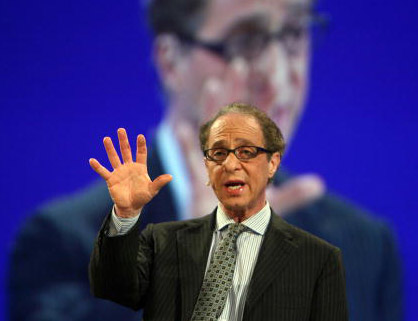
Inventor and technology futurist Ray Kurzweil thought the same thing. So the man who developed optical character recognition and voice recognition came up with Blio, a digital book software program that promises to put those gray-scale displays to shame.

via Ray Kurzweil on the future of digital books | Technology | Los Angeles Times.

We’re in trouble… « Bits & Pieces

The Population of this country is 300 million.

160 million are retired.

That leaves 140 million to do the work.

There are 85 million in school.

Which leaves 55 million to do the work.

Of this there are 35 million employed by the federal government.

Leaving 20 million to do the work.

2.8 million are in the armed forces preoccupied with killing Osama Bin-Laden.

Which leaves 17.2 million to do the work.

Take from that total the 15.8 million people who work for state and city governments

And that leaves 1.4 million to do the work.

At any given time there are 188,000 people in hospitals.

Leaving 1,212,000 to do the work.

Now, there are 1,211,998 people in prisons.

That leaves just two people to do the work.

You and me.

And there you are, sitting on your ass, at your computer, reading jokes.

Nice. Real nice.

via We’re in trouble… « Bits & Pieces.

Nike Confuses USC With that School Near Diddy Riese. « Lost Angeles

Unless I am being punked this is absurd.  Unless I went spontaneously colorblind, this is utterly insane.  Nike spends more money on their products and ads and R&D than almost anyone out there.  I know sometimes spicing up a team’s clothing designs sparks sales.  Sometimes, we like a Dodger hat in brown with a key lime LA on it.  We like to get extra funky sometimes.

via Nike Confuses USC With that School Near Diddy Riese. « Lost Angeles.

What Should We Do With a Semi-Abandoned U.S. City? » INFRASTRUCTURIST

We’ve never had a situation quite like Detroit in modern American history: A major U.S. city — once the fourth largest in the country — losing over half of its population in a few decades, following the collapse of its principal industry. Just how bad has it gotten? Unemployment in the city has hit 27%, and houses are selling for an average of $15,000.

via What Should We Do With a Semi-Abandoned U.S. City? » INFRASTRUCTURIST.