Fructose-Free Father’s Office

Less than a year ago Father’s Office opened a new location in Culver City. This afternoon I had a chance to check it out and they have done a great job at extending their customers’ experience just enough to keep things interesting.

The burgers were awesome as always. The sweet potato fries are peerless. And the most interesting take-away from my experience there tonight was learning that they don’t serve soda with corn syrup.

If you attempt to order a diet coke you might the guy who takes your order may answer back with “diet cola?” Normally, this would mean you were going to get no-coke-pepsi. Puzzled, the bartender retorted that Father’s Office will not serve anything containing corn syrup, apparently hopping on the latest nutritional bandwagon that corn syrup is the root of all evil. I doubt it’s good for you, but this seems a little excessive.

Nevertheless, I was pleased to learn that my Coke came from Mexico, because Mexican Coke has no high-fructose corn syrup. Instead, like some fancy North American feel-good soda company, Coca-Cola distributing of Mexico is sweetening their most famous beverage with a local, cheaper ingredient: cane sugar.

I’ve always found it interesting how Coke will adapt its formula to local markets.

Little Osaka

Little Osaka is a stretch of Sawtelle Boulevard that runs between Olympic and Santa Monica Boulevard in west Los Angeles. The area has an interesting history.

From what I remember reading about the area, the region has unpleasant history. In the early 1900s, the land directly north of this area was home to numerous large estates, the grounds of which were cared for by local gardeners. A large number of the gardeners were Japanese. The gardeners built nurseries in order to provide plants for these gardens. Sadly, the law prohibited Japanese-Americans from owning land within the city limits, so the Japanese gardeners built their nurseries just outside the city limits.

This area is where Sawtelle Boulevard runs today. A few of the nurseries are still there, but this is the reason that there is such a large concentration of Japanese-Americans in this neighborhood.

Little Tripod in Little Osaka

We had dinner in Little Osaka tonight. It’s one of my favorite neighborhoods in the city. It was a great spot for us to have an impromptu ramen dinner on Valentine’s Day evening. Afterward we stopped by a little shop called Tokyo Japanese Outlet. I did a Google search on the address and it looks like the store used to be named Tokyo 99 Plus.

I’ve been in this store a bunch of times, but I never really took the time to thoroughly check out all the cool stuff they have in there. I’m looking forward to my next trip.

I figured out what why it used to be called “Tokyo 99 Plus” when I found several rather interesting products for $1.99.

The first one I decided to check out was this fun little tripod. It feels a little flimsy, but, as you can see, it works fine for small digital cameras. I’ve been looking for something like this as I quite often end up with blurry photos (like this one) because holding down the shutter button seems to cause the camera to shake just so…

I’m excited to get back to this store. They had a bunch of other products for $1.99. You can see a bunch of them on the manufacturer’s website.

Unlocking and Modding an ATT Tilt (8925)

Unlock your AT&T 8925 Tilt and start flashing custom ROMs and radio software onto it, this is a great place to get started:

http://forum.xda-developers.com/showthread.php?t=433835

I came across a fully functional spare 8925 when I was packing up to move into my new apartment. This guy needed to be unlocked and flashed, since my current 8925 was seeing some wear and tear (the “u” button on my keyboard’s a little iffy and the touchscreen has a small scratch in it). Switching to a backup will give me time to dissect my old handset and make some repairs.

So, including the time it took to download the HardSPL, CIDUnlocker, and the lite ROM I wanted, the whole process took about an hour.

Not too bad, as long as you are confident you know what you are doing.

If you need your phone, and aren’t sure, play it safe. You don’t want to BRICK!

Steampunk Santa Monica

A sketch of the Keller Building from 1893

So, there’s this building in Santa Monica…

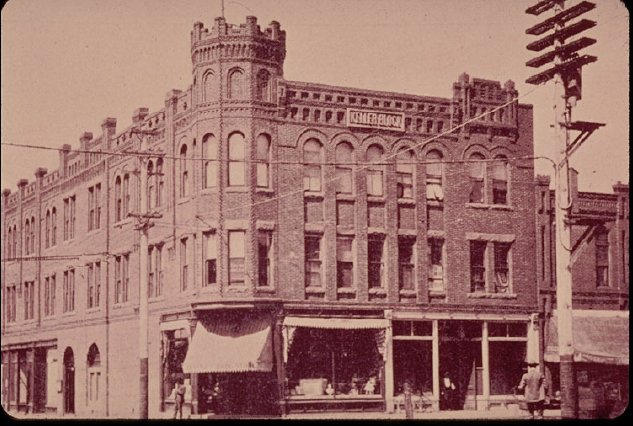
Big Orange Landmarks just published a great post on the Stimson Mansion in South LA. Its architect was one of LA’s great early architects, Carrol H. Brown. One of his most recognizable works is the Keller Block building at the base of Third Street Promenade in Santa Monica.

The Keller Building in a photograph from 1902.

You may know the building better as Larry David’s office building from the first few seasons of Curb Your Enthusiasm.

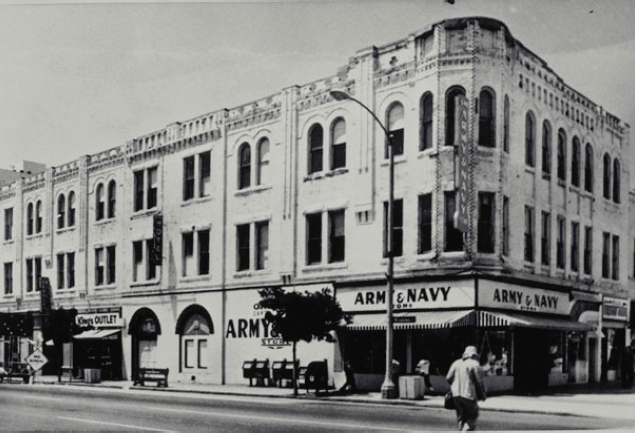
A photo of the Keller Building at 90 years old.

The Keller Block Building
227 Broadway, Santa Monica, CA 90401
1456-1460 3rd Street, Santa Monica, CA 90401

Constructed in 1893

Although constructed during the Victorian era, this building was designed in a less conventional style for the period, known as Richardsonian Romanesque Revival style.

From the Landmark Assessment Report:

The Keller Block is a good example of a regional interpretation of the Richardsonian Romanesque Revival style. The Romanesque Revival style originated in Chicago in the office of architect Henry Hobson Richardson who was one of the first American architects to study architecture at the École des Beaux Arts in Paris. Richardson’s interpretation of the Romanesque Revival style incorporated architectural elements from Spanish, Italian, and southern French Romanesque architecture. The style was popular in America during the late nineteenth century and later came to be called “Richardson Romanesque,” after its creator. The style is characterized by building materials of large, rock-faced masonry, and wide arches quarried from local stone. The style was used for public and commercial buildings as well as elaborate residences. Modest interpretations of the style were also executed in wood frame with weatherboard and/or shingle siding. The restrained architectural detailing was in stark contrast with the elaborate Victorian style of the time. Richardson’s innovative plans and functional design philosophy first employed in the Romanesque Revival idiom eventually resulted in the development of the Shingle Style in residential architecture around the turn of the twentieth century.

References

FINDINGS AND DETERMINATION OF THE LANDMARKS COMMISSION OF THE CITY OF SANTA MONICA IN THE MATTER OF THE DESIGNATION OF A LANDMARK

City Landmark Assessment and Evaluation Report